

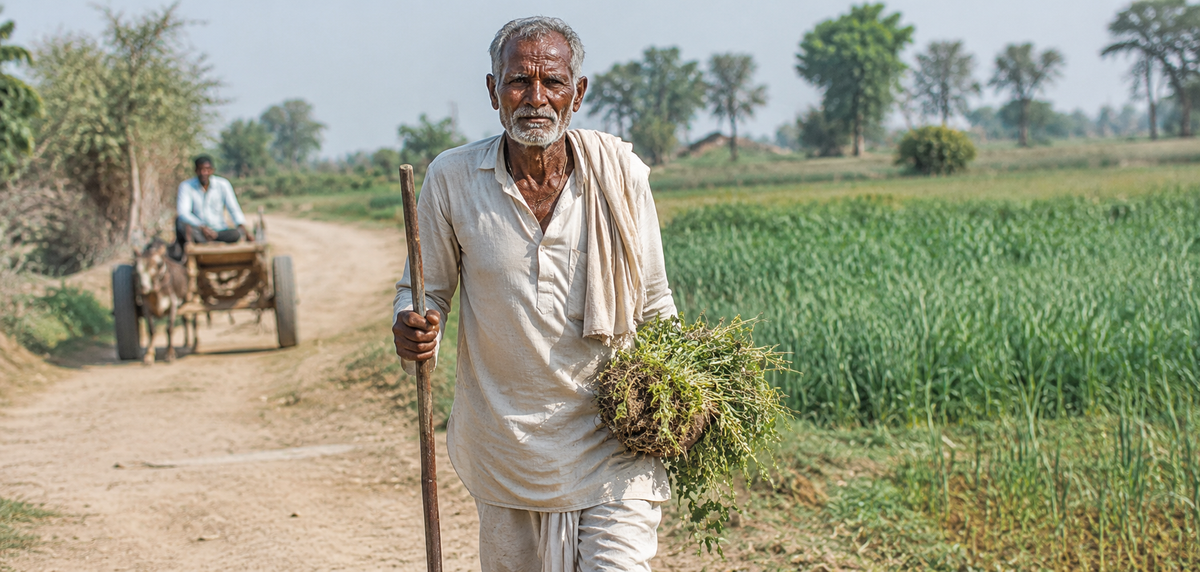
Why do people in one part of India so often stay sharp and active past 70? Researchers keep pointing to a single fruit.
For decades, visitors noticed the same thing in certain rural regions: people working, walking and staying clear-headed at an age when many elsewhere have slowed right down. The explanation may be simpler, and closer to home, than anyone expected.
It is one of those observations that sounds like a traveller's exaggeration, until you hear it enough times. In parts of rural India, reaching 70 or 80 while still farming, walking long distances and staying mentally sharp is not remarkable. It is simply ordinary.
Naturally, people have looked for reasons. Genetics, a slower pace of life, less processed food, more sun, all of it plays some part. But one detail kept surfacing, again and again, in accounts going back generations: a small, sour green fruit that shows up in the daily diet, in tonics, and in traditional medicine, where practitioners gave it a telling nickname. They called it "The Nurse."
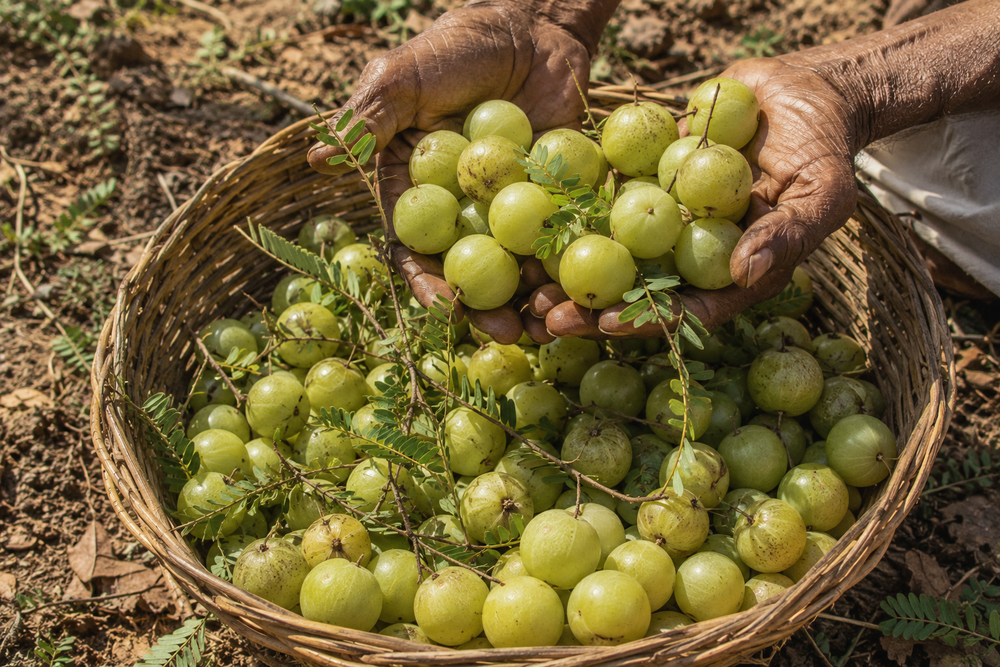
The fruit is Amla, the Indian gooseberry. And what modern researchers find interesting about it is not folklore. It is one of the most antioxidant-rich fruits ever measured.
Why that one detail matters more than it sounds
To understand why a single fruit could be connected to staying vital with age, you have to understand what quietly ages the body in the first place.
Scientists have a name for a big part of it: oxidative stress. In plain terms, it is the slow, everyday wear caused by stress, processed food and simply living for decades, damage that builds up inside the body the way rust builds on metal. Invisible, gradual, and relentless. It is now linked to much of what we casually file under "just getting older": flagging energy, a foggier mind, slower recovery, tired-looking skin, and a body that handles stress less well than it used to.
The body's main defence against that wear is a class of compounds called antioxidants. And this is where the fruit stops being a curiosity. Amla is extraordinarily dense in exactly the antioxidants, called emblicanins, that the body uses to defend itself. In other words, a population that consumes it regularly may be quietly getting a daily dose of the one thing that pushes back against everyday oxidative wear.
Which brings us to you
Here is the part that turns a far-away curiosity into something personal. That same everyday wear, oxidative stress, does not only happen in one part of the world. It happens to all of us. And if you are past 50, there is a reasonable chance you have already started to feel it, even if you have never had a name for it.
The afternoon energy that fades earlier than it used to. The night's sleep that no longer fully recharges you. The word that sits on the tip of your tongue. The meal that leaves you heavy. Most people shrug these off as age. But they are very often the same quiet process the researchers were describing, showing up in an ordinary European life instead of a rural Indian one.
The difference is that the fruit which may help push back against it was, until recently, hard to get in its pure form outside of India.
From a village remedy to a single capsule
What has changed is availability. The purest form of Amla is now produced in Europe as a clean, single-ingredient extract, not a twenty-ingredient blend where nothing is present in a dose that matters, but one well-chosen ingredient, clinically dosed.
It will not turn back a calendar, and no honest article would promise that. But giving the body a steady daily supply of the antioxidants it uses to defend itself is, at the very least, a sensible thing to do, and it is exactly what a population famous for ageing well appears to have been doing all along.
The pure Amla extract described here is sold in Europe under the brand Elavary: a single ingredient, clinically dosed, no blends or fillers. Made in Europe, third-party tested, and it works out to around €1.17 a day, taken as two capsules with water.
It currently comes with free shipping and a 30-day money-back guarantee, so readers can try it and return it if they feel no difference.
Readers curious to try the fruit behind the story can check current availability below.
See availability